
Table of Contents
- Introduction
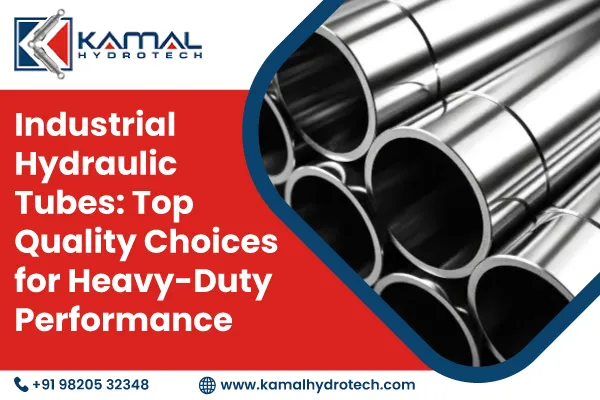
Industrial hydraulic systems operate under extreme pressure, temperature variation, vibration, and continuous mechanical load. At the core of these systems lies a critical component that directly influences performance and safety — the hydraulic tube. From heavy manufacturing units and construction machinery to power plants and marine equipment, industrial hydraulic tubes carry pressurized fluid that powers motion, control, and productivity. Any compromise in tube quality can lead to system failure, fluid loss, and costly downtime.
This is why industries rely only on precision-engineered tubes from reliable sources such as Hydraulic Tubes Suppliers in Pune who meet strict performance and dimensional standards. As a trusted Hydraulic Tubes Manufacturer, Kamal Hydrotech provides industrial hydraulic tubes designed for demanding applications where reliability is non-negotiable. This detailed guide explores every technical and performance aspect of industrial hydraulic tubes — including materials, processes, applications, selection criteria, and long-term performance advantages — helping buyers make accurate, professional procurement decisions based on real industrial requirements.
Understanding Industrial Hydraulic Tubes and Their Role
Industrial hydraulic tubes are rigid metallic conduits used to transport pressurized hydraulic fluid between pumps, valves, actuators, and cylinders. Unlike flexible hoses, these tubes are used in permanent, fixed, and high-load hydraulic circuits where dimensional stability, pressure resistance, and long service life are essential.
Key Functional Responsibilities of Hydraulic Tubes
- Transfer hydraulic fluid under high internal pressure
- Maintain system pressure stability
- Withstand vibration, heat, and mechanical stress
- Support continuous duty cycles
- Preserve fluid purity through smooth internal surfaces
Hydraulic tubes directly influence machine response time, system efficiency, and operational safety. This is why manufacturers prefer sourcing tubes from certified Hydraulic Tubes Supplier partners with consistent quality control.
Industrial Hydraulic Tube Specifications & Classifications
Manufacturing Type: Seamless vs Welded Tubes
- Seamless Hydraulic Tubes: Produced through hot rolling or cold drawing from solid billets, seamless tubes feature uniform metal structure with higher pressure tolerance. They are widely used in critical industrial applications where pulse pressure, vibration, and thermal cycles exist.
- Welded Hydraulic Tubes: Formed by rolling steel strips and welding the seam. These are suitable for moderate-pressure systems where cost optimization is the priority. For heavy-duty industrial machinery, seamless construction remains the preferred choice from every experienced Hydraulic Tubes Manufacturer.
Material Grades Used in Industrial Hydraulic Tubes
Material selection governs strength, corrosion resistance, machinability, and pressure capacity:
- Carbon Steel Grades: Common grades include E235, E355, and similar DIN or EN standards. These grades provide excellent machinability with high tensile strength for industrial hydraulic circuits.
- Alloy Steel Grades: Alloy grades with chromium and molybdenum additions offer enhanced fatigue resistance and load bearing capacity, suitable for presses and heavy structural hydraulics.
- Stainless Steel Grades: Stainless steel tubes serve corrosive, marine, pharmaceutical, and chemical processing industries where environmental resistance is critical.
Surface Treatment and Finishing Standards
Surface treatments enhance durability and protection against environmental degradation:
- Phosphate coatings for corrosion control
- Pickled and oiled finishes for machining stability
- Polished surfaces for hygienic industrial environments
- Rust-preventive oil coatings for long-term storage
Internal surface finish plays a major role in flow efficiency and seal performance.
Honed and Skived Roller Burnished (SRB) Tubes
Hydraulic cylinders demand ultra-smooth internal bore finishes:
- Honed Tubes: involve precision abrasive honing for mirror-like internal surfaces. These promote seal longevity and reduced friction.
- SRB Tubes: combine skiving and roller burnishing to achieve tight dimensional tolerances with work-hardened internal surfaces.
Both variants are widely adopted by OEMs sourcing from specialized Hydraulic Tubes Supplier networks.
Dimensional Tolerances and Straightness
Industrial hydraulic tubes must meet strict outer diameter (OD), inner diameter (ID), roundness, and straightness tolerances. Tight tolerances support:
- Accurate fluid flow rates
- Efficient pressure retention
- Optimal fitting connections
- Reduced vibration fatigue
Precision measurement directly affects system stability in servo-driven hydraulic machinery.
Technical Testing and Quality Control
Each industrial batch undergoes:
- Eddy current testing
- Hydraulic pressure testing
- Chemical composition verification
- Mechanical property testing
- Dimensional calibration
Certified Hydraulic Tubes Suppliers in Pune strictly adhere to these verification protocols before dispatch.
Benefits, Features & Industrial Importance of High-Quality Hydraulic Tubes
- Structural Strength Under Continuous Load: Heavy-duty hydraulic applications operate around the clock under repetitive pressure cycles. High-grade tubes maintain shape stability without metal fatigue, allowing uninterrupted performance across production shifts.
- Superior Pressure Handling Capacity: Industrial machines generate pressure ranging from 150 to 700 bar. Precision tubes selected by a professional Hydraulic Tubes Manufacturer are designed with accurate wall thickness to meet pressure ratings with stable safety margins.
- Reduced System Leakage and Fluid Loss: Smooth inner surfaces and dimensional accuracy reduce micro-leaks at fittings and joints. This preserves hydraulic oil integrity and protects pump assemblies.
- Improved Thermal Performance: Hydraulic oil temperature fluctuates severely. Quality hydraulic tubes offer excellent thermal resistance, preventing heat distortion and maintaining consistent fluid flow dynamics.
- Lower Maintenance Frequency: Durable surface treatments and corrosion-resistant materials reduce scaling, rust formation, and internal contamination. This limits unscheduled maintenance cycles and machine idle time.
- Extended Equipment Service Life: Stable fluid pressure and reduced contamination contribute directly to longer life of valves, cylinders, seals, and pumps — resulting in significant lifecycle cost savings.
Industrial Applications of Heavy-Duty Hydraulic Tubes
- Construction & Earthmoving Equipment: Excavators, cranes, loaders, and pile drivers operate with high shock loads and frequent motion. Seamless hydraulic tubes manage pressure surges and mechanical vibration.
- Manufacturing & Automation Lines: Precision tubes support robotic arms, presses, and injection molding machines where repeatability and cleanliness are essential.
- Power Generation & Marine Systems: Turbine controls, ship steering, and offshore rigs demand corrosion-resistant tubes that tolerate saline environments and thermal cycling.
- Agricultural & Forestry Machinery: Tractors, harvesters, and feller-bunchers work in dusty, moist fields; tubes must resist both internal pressure and external corrosion.
How to Select the Right Industrial Hydraulic Tube
- Operating Pressure Requirements: System working pressure must remain well below the tube’s maximum allowable working pressure. Tube selection accounts for surge pressure, pulse loads, and temperature variation.
- Environmental Exposure Factors: Indoor factory installations vary significantly from outdoor marine or mining sites. Selection depends on corrosion exposure, humidity, chemicals, or abrasive dust levels.
- Temperature Tolerance: Hydraulic oil viscosity changes rapidly with temperature. Tubes must withstand both ambient heat and internal thermal loads without dimensional deformation.
- Fitting Compatibility: Tube OD and wall thickness must match compression fittings, flared joints, or welded connectors to prevent leaks under vibration.
- Long-Term Procurement Consistency: Industries with long-running equipment lines demand consistent tube dimensions across multiple supply batches. A stable Hydraulic Tubes Manufacturer relationship supports interchangeability during maintenance.
Manufacturing Process and Quality Philosophy at Kamal Hydrotech
As a precision-focused Hydraulic Tubes Manufacturer, Kamal Hydrotech maintains complete control over sourcing, fabrication, finishing, and inspection processes. Each manufacturing phase complies with industrial norms for dimensional stability, chemical uniformity, and mechanical reliability.
Advanced processing includes:
- Cold drawing for dimensional accuracy
- Stress relieving for uniform grain structure
- Controlled environment finishing
- Robust packaging for transit protection
Consistent process discipline allows Kamal Hydrotech to meet the evolving performance requirements of heavy engineering industries across India.
Why Choose Us
Choosing Kamal Hydrotech means partnering with a company that understands industrial reliability beyond product supply. With precision manufacturing discipline, material accountability, and deep application knowledge, Kamal Hydrotech delivers hydraulic tubes that perform consistently under sustained pressure, vibration, and demanding working conditions. As one of the dependable Hydraulic Tubes Suppliers in Pune, the company focuses on long-term mechanical stability, buyer-specific technical requirements, and uncompromising quality standards that support uninterrupted industrial productivity and client confidence over decades of operation.
Conclusion
Industrial hydraulic tubes define the safety, efficiency, and longevity of modern hydraulic systems. From material composition and manufacturing technique to surface finishing and pressure compatibility, each technical attribute directly influences operational performance. High-duty cycles, thermal loads, and vibration demand tubes that maintain dimensional integrity across years of service. By sourcing from experienced Hydraulic Tubes Supplier networks such as Kamal Hydrotech, industries gain assurance of consistent quality, reliable pressure handling, and long-term operational stability. The right hydraulic tube selection remains a strategic investment into productivity, safety, and asset life.
For industrial-grade hydraulic tubes with certified quality and performance reliability, contact Kamal Hydrotech today. Call +91 98205 32348 or email info@kamalhydrotech.com to discuss your project requirements.