
Table of Contents
- Introduction
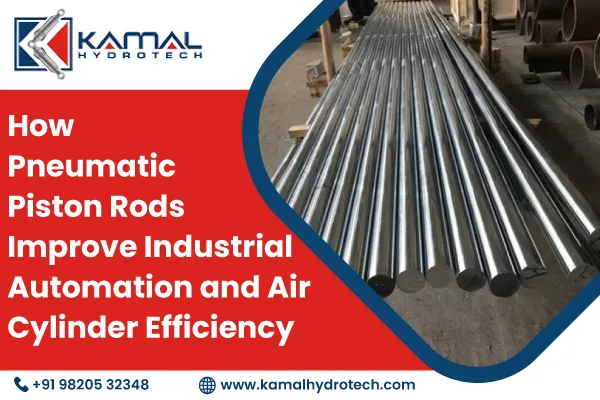
Industrial automation has become the foundation of modern manufacturing, helping industries achieve higher productivity, uniform quality, and faster processing with reduced human dependency. At the center of this automated movement are pneumatic systems that convert compressed air into controlled mechanical motion. One of the most critical components in this system is the pneumatic piston rod. Though it may appear simple, its role in motion transfer, load handling, pressure stability, and long-term system reliability is extremely significant. Any compromise in its quality directly affects machine output, downtime frequency, and overall operational cost.
In automated air cylinder systems, the piston rod acts as the mechanical connection between internal air pressure and external machine movement. Its surface accuracy, material strength, and dimensional stability determine how efficiently energy is transferred and how smoothly operations continue. As a trusted engineering manufacturer, Kamal Hydrotech supplies precision-engineered pneumatic piston rods designed for demanding industrial environments. This blog provides a complete, technical, and application-focused explanation of how pneumatic piston rods improve industrial automation and air cylinder efficiency, along with their performance impact across modern industries.
Understanding the Role of Pneumatic Piston Rods in Automation Systems
A pneumatic piston rod is a hardened metallic shaft mechanically connected to the piston inside an air cylinder. When compressed air enters the cylinder, it creates internal pressure that moves the piston linearly. The piston rod transfers this linear movement outside the cylinder to perform work such as pushing, pulling, lifting, pressing, or positioning components. This simple mechanical function becomes the backbone of automated movements in various industrial operations.
In automation systems, even minor instability in piston rod accuracy can create vibration, seal damage, air leakage, and misalignment. When this happens repeatedly across production cycles, it reduces productivity and increases maintenance costs. That is why material quality, straightness tolerance, chrome plating thickness, and surface polish are treated as mission-critical parameters in pneumatic piston rod manufacturing. Well-engineered piston rods directly support machine precision, motion stability, and long-term performance.
Material Strength and Surface Engineering: The Foundation of Performance
The mechanical performance of a pneumatic piston rod depends heavily on its base material. Medium carbon steel, alloy steel, and stainless steel are commonly used based on application pressure, environmental exposure, and load conditions. High-grade alloy steels offer superior tensile strength and fatigue resistance for continuous-duty applications, while stainless steel piston rods deliver excellent corrosion resistance for chemical, food processing, and pharmaceutical environments.
Surface engineering further strengthens the rod’s working life. Hard chrome plating plays a central role in protecting the base metal from wear, corrosion, and frictional damage. A properly applied chrome layer provides a smooth, consistent surface that supports both seal longevity and stable sliding motion. Micro-finish polishing reduces surface roughness to very fine levels, allowing better lubrication retention and minimizing abrasion between the rod and cylinder seals. This combination of material strength and surface precision establishes the mechanical stability required for high-speed industrial automation.
Benefits, Features, and Industrial Importance of Pneumatic Piston Rods
- Consistent Linear Motion: Precision-manufactured rods maintain straight-line movement, reducing vibration and ensuring repeatable positioning in automated systems.
- Balanced Pressure Distribution: Accurate rod dimensions help maintain uniform air pressure across the cylinder, improving energy efficiency and stroke consistency.
- Minimized Air Leakage: Smooth chrome surfaces protect dynamic seals, reducing air loss and lowering compressor load.
- High Load Handling Capacity: Heat-treated alloy cores withstand repeated tensile and compressive forces without deformation.
- Corrosion Resistance: Chrome or stainless-steel surfaces resist oxidation, extending service life in humid or chemical environments.
- Low Maintenance Requirements: Superior surface finish reduces wear on seals and bushings, cutting downtime and spare-part costs.
How Pneumatic Piston Rods Improve Motion Control Accuracy
Automation success depends on precise, repeatable movement. Pneumatic piston rods manufactured with strict straightness tolerance and dimensional accuracy maintain proper alignment within the air cylinder bore. This alignment reduces lateral forces on seals and guide bushes, allowing the piston assembly to move smoothly even under high speed.
Stable motion control is especially important in automated packaging lines, robotic pick-and-place systems, and precision assembly equipment where positional consistency defines product quality. Any deviation caused by rod bending or surface irregularity can result in product variation, mechanical noise, and unexpected downtime. Precision-engineered piston rods protect motion stability throughout prolonged operational cycles.
Load Handling Capacity and Fatigue Resistance in Continuous Operations
In many automation systems, pneumatic cylinders handle vertical lifting, pressing forces, and mechanical transfer of heavy components. Pneumatic piston rods in such systems experience repeated tensile and compressive stress. If the rod lacks sufficient core strength, micro-cracking, bending deformation, or surface fractures may develop over time.
High-quality heat treatment processes improve internal grain structure and enhance yield strength. Controlled induction hardening increases surface hardness without making the rod brittle. This balance between core toughness and surface hardness allows pneumatic piston rods to handle fluctuating loads without fatigue-related failure. This durability becomes extremely valuable in industries that operate machines continuously across multiple shifts.
Seal Protection and Air Leakage Control
Sealing performance is one of the most critical parameters that define air cylinder efficiency. The piston rod is in constant contact with dynamic seals that retain compressed air within the cylinder chamber. Any surface roughness, pitting, or chrome layer inconsistency damages seals and allows air to escape during operation.
A uniform, smooth piston rod surface supports stable seal contact and minimizes friction. Reduced seal wear leads to better pressure retention, stable stroke speed, and consistent output force. This control over air leakage has a direct impact on energy consumption, as the compressor does not need to compensate for continuous pressure loss.
Corrosion Resistance and Environmental Protection
Industrial environments often expose pneumatic equipment to moisture, chemical vapors, dust, and temperature fluctuations. Corrosion on piston rods not only weakens the metal but also destroys surface smoothness, leading to accelerated seal damage and performance loss.
Stainless steel piston rods and properly chrome-plated rods resist oxidation and chemical attack. This corrosion resistance becomes essential in industries such as food processing plants, pharmaceutical manufacturing units, chemical reactors, and outdoor automation systems. By protecting the piston rod surface from environmental degradation, operational stability and equipment lifespan remain intact.
Compatibility with Advanced Pneumatic Automation Systems
Modern pneumatic automation frequently integrates sensors, electronic feedback systems, and programmable logic controllers. Pneumatic piston rods must maintain exact dimensional compatibility with proximity sensors, encoders, and guided cylinder systems to allow accurate signal feedback.
High-precision piston rods support synchronized motion with smart control systems used in robotics, automated assembly stations, and adaptive material handling units. Dimensional mismatches can interrupt sensor readings and create positioning errors, which disrupt automated processes. Precision manufacturing eliminates such integration challenges.
Maintenance Reduction and Lifecycle Cost Control
The total operational cost of pneumatic systems is not calculated only by initial component pricing. It also includes maintenance frequency, downtime expense, replacement cycles, and energy usage. High-grade pneumatic piston rods reduce all these cost factors by stabilizing motion, protecting seals, and limiting air leakage.
With consistent surface integrity and mechanical strength, these rods operate for extended periods without requiring frequent servicing. Predictable performance allows industries to schedule planned maintenance rather than react to unexpected failures. This directly improves production planning, workforce efficiency, and long-term equipment economics.
Manufacturing Precision Behind Industrial-Grade Pneumatic Piston Rods
The production of pneumatic piston rods requires extreme dimensional control. Advanced CNC turning establishes precise diameters, while centerless grinding achieves exceptional straightness. These machining practices prevent off-axis movement and uneven load distribution during cylinder operation.
Heat treatment further improves surface and core properties by stabilizing internal molecular structure. After machining and hardening, chrome plating is applied in controlled thickness to achieve uniform wear characteristics. Final polishing enhances surface smoothness to support seal glide and lubrication stability. Each production stage requires precise inspection to maintain consistent quality.
As a specialist manufacturer, Kamal Hydrotech follows structured quality control systems to validate dimensional tolerance, hardness values, surface finish levels, and chrome thickness before final dispatch. This systematic approach protects long-term performance in demanding automation environments.
Regional Supply Advantages and Technical Support
Industrial automation relies heavily on timely component availability and responsive technical support. For manufacturers and system integrators searching for Pneumatic Piston Rods Suppliers in Pune, proximity to production facilities plays a vital role in minimizing lead time, easing technical communication, and improving customization turnaround.
Working with localized suppliers helps avoid logistical delays and supports faster resolution of specification adjustments or urgent replacement requirements. Regional manufacturing also supports collaborative engineering between equipment designers and component producers. This partnership-oriented supply model strengthens overall automation reliability.
Why Choose Us
Kamal Hydrotech represents reliability, engineering accuracy, and consistent performance in the field of pneumatic components. The company’s long-standing manufacturing experience, controlled production systems, and strong technical focus allow it to deliver pneumatic piston rods that meet strict industrial expectations. Clients trust Kamal Hydrotech for its stable quality, professional approach, and commitment to providing components that support uninterrupted automation performance and long-term operational confidence.
Conclusion
Pneumatic piston rods play a foundational role in shaping the efficiency, reliability, and energy performance of industrial automation systems. Their influence extends from motion control accuracy and load handling capacity to pressure stability and seal protection. Through precise material selection, controlled surface engineering, and strict dimensional accuracy, pneumatic piston rods help maximize air cylinder efficiency while minimizing mechanical losses and maintenance frequency. Industries that invest in high-quality piston rods achieve smoother operations, lower energy consumption, and predictable machine performance. With its precision-focused manufacturing approach, Kamal Hydrotech continues to support industrial automation systems with technically reliable pneumatic piston rods designed for long-term service stability.
For high-performance pneumatic piston rods designed for demanding industrial automation, call +91 98205 32348 or email info@kamalhydrotech.com to connect with the technical experts at Kamal Hydrotech.